

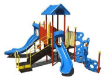
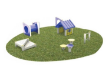














A well-designed commercial playground provides children with opportunities to explore, develop physical skills, and interact with others. For schools, parks, daycare centers, HOAs, and municipalities, selecting the right equipment means balancing play value with safety, accessibility, construction materials, and maintenance.
This guide explains how to compare playground equipment types, evaluate materials, plan age-appropriate play areas, and make informed purchasing decisions for shared-use outdoor spaces.
Why Choosing the Right Playground Equipment Matters
Commercial playgrounds serve different users and environments. A daycare may need low-level play structures and sensory activities, while a public park may require larger structures, climbing challenges, and a broader selection of activities.
Choosing equipment based only on appearance or purchase price can overlook important long-term considerations.
Age Appropriateness
Select equipment that matches intended users' developmental abilities and manufacturer age ratings.
Play Variety
Combine climbing, sliding, balancing, imaginative play, and interactive activities.
Construction Quality
Evaluate structural materials, protective finishes, hardware, and environmental suitability.
Safety Requirements
Consider use zones, fall heights, protective surfacing, and installation requirements together.
Accessibility
Plan accessible routes and meaningful play opportunities for children with different abilities.
Maintenance
Review inspection needs, cleaning procedures, replacement parts, and long-term upkeep.
Understanding Commercial Playground Equipment Types
Playground equipment ranges from complete multi-activity structures to individual play stations. Combining complementary activities helps create a balanced environment.
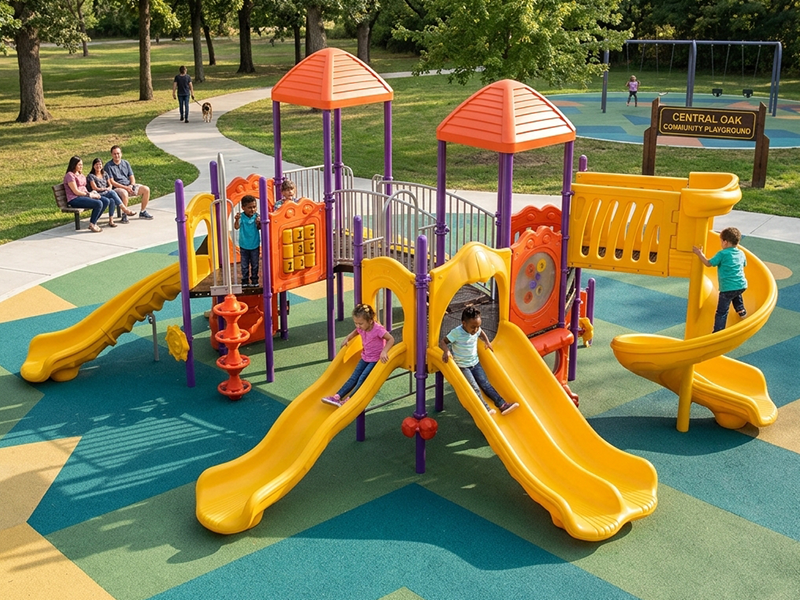
Playground Sets
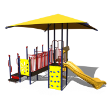
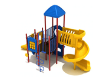
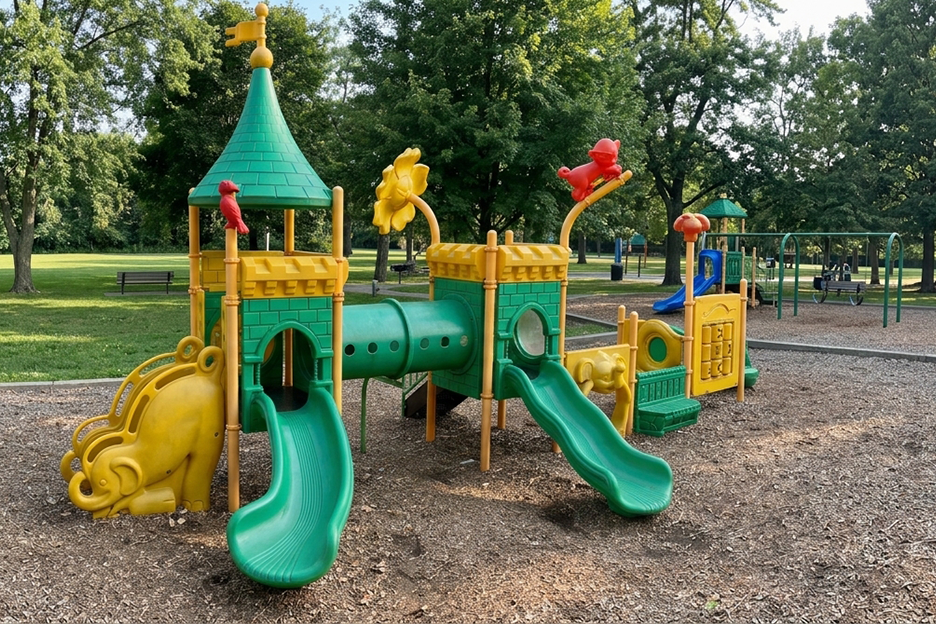
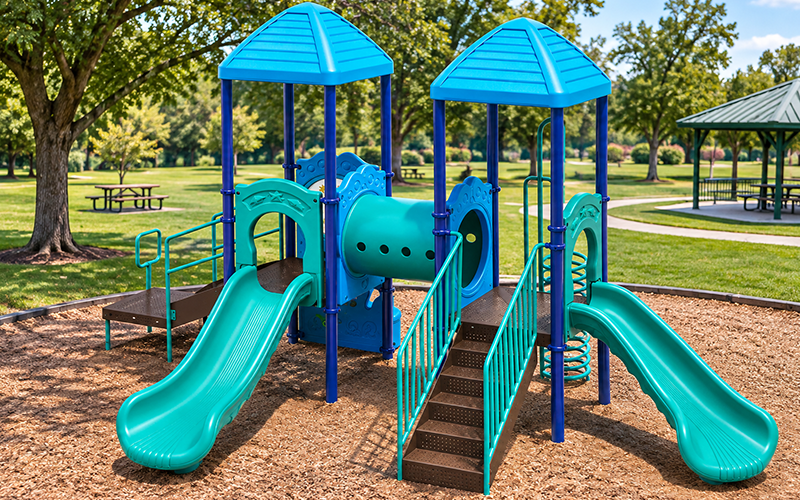
Connected structures may combine slides, platforms, climbers, bridges, and interactive panels. They provide multiple activities within one coordinated play area.
Best for: Schools, parks, daycare centers, and residential communities.
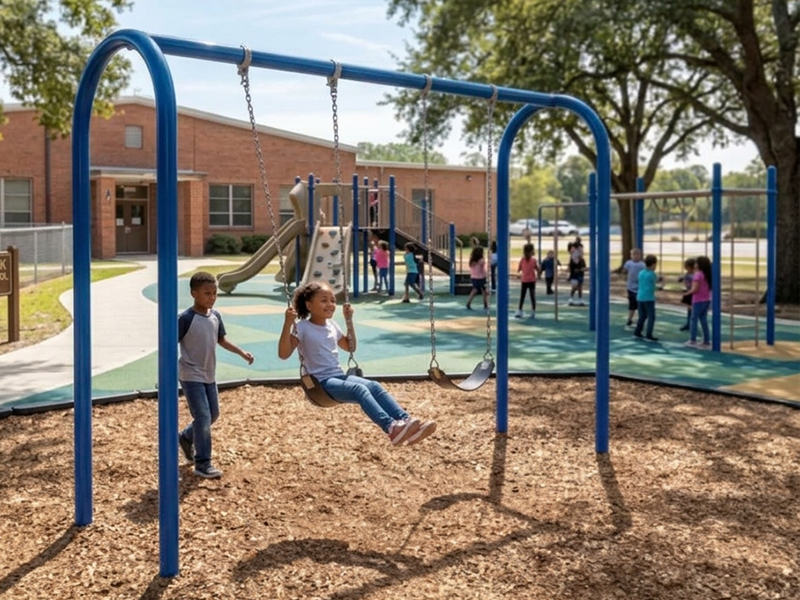
Swings
Swings encourage coordinated movement and balance. Seat styles and equipment configurations vary by age and intended use.
Planning focus: Movement clearances and age-appropriate seating.
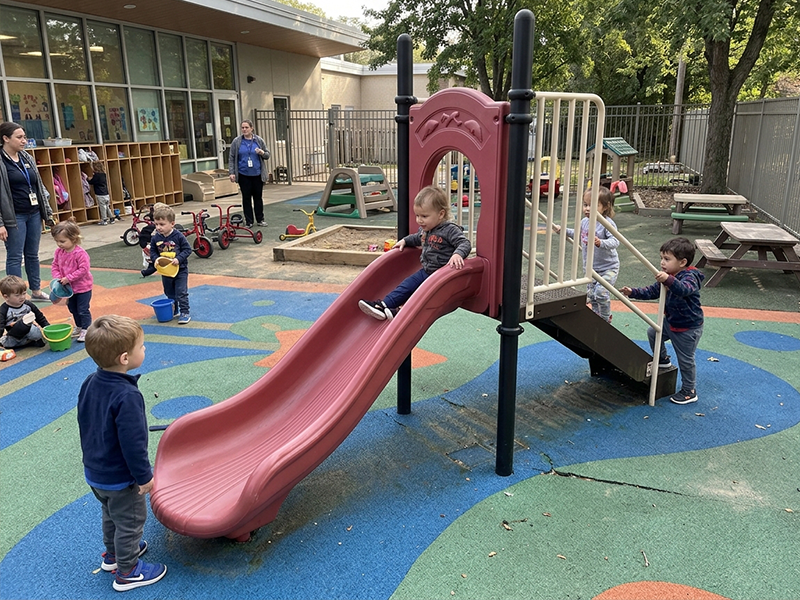
Slides
Slides introduce movement and coordination challenges. Compare slide height, access, exit areas, materials, and sun exposure.
Planning focus: Age ratings and slide exit zones.
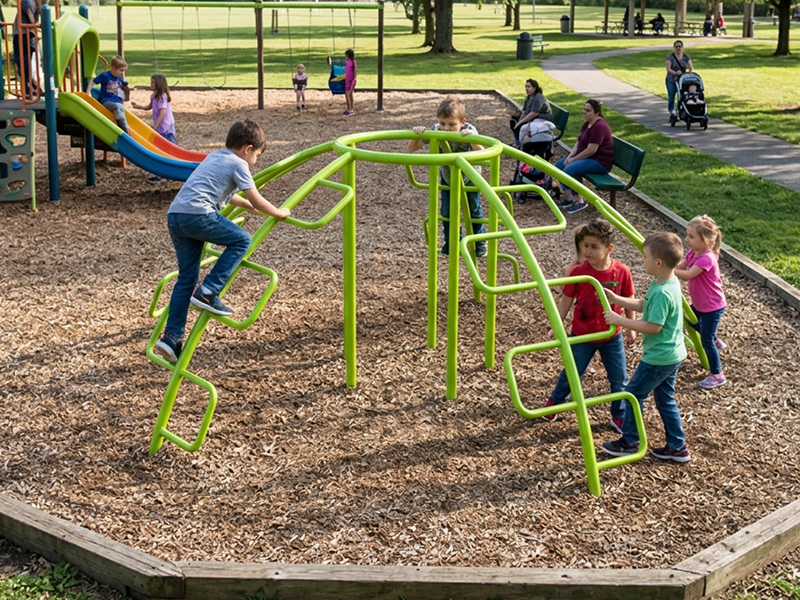
Climbers
Climbing walls, ladders, and geometric structures encourage strength, coordination, and problem-solving through physical activity.
Best for: Schools and recreation areas with age-appropriate challenges.
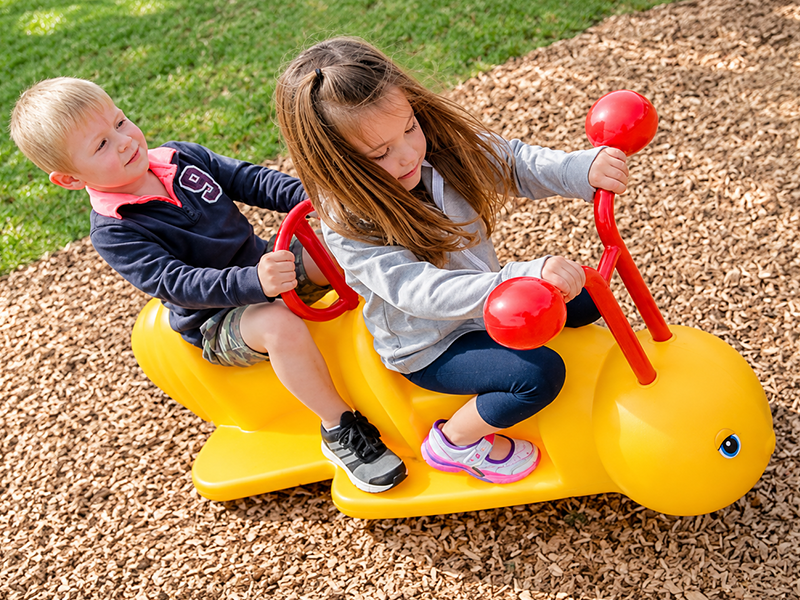
Spring Riders & Seesaws
Rocking and cooperative movement introduce balance and shared-play experiences. Designs vary in movement and age suitability.
Planning focus: Motion clearances and supervision.
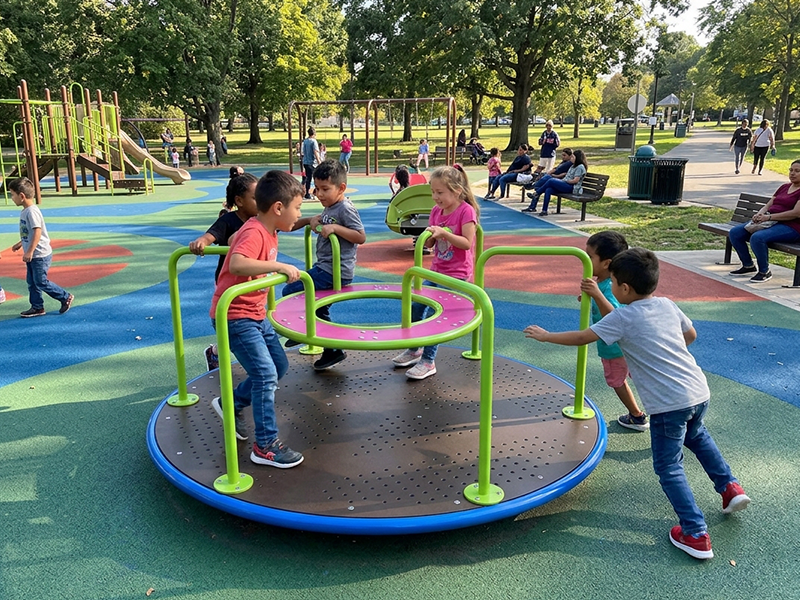
Spinning Rides
Rotating equipment offers movement-based play and social interaction. Select designs suited to the intended users.
Planning focus: Rotational movement and use zones.
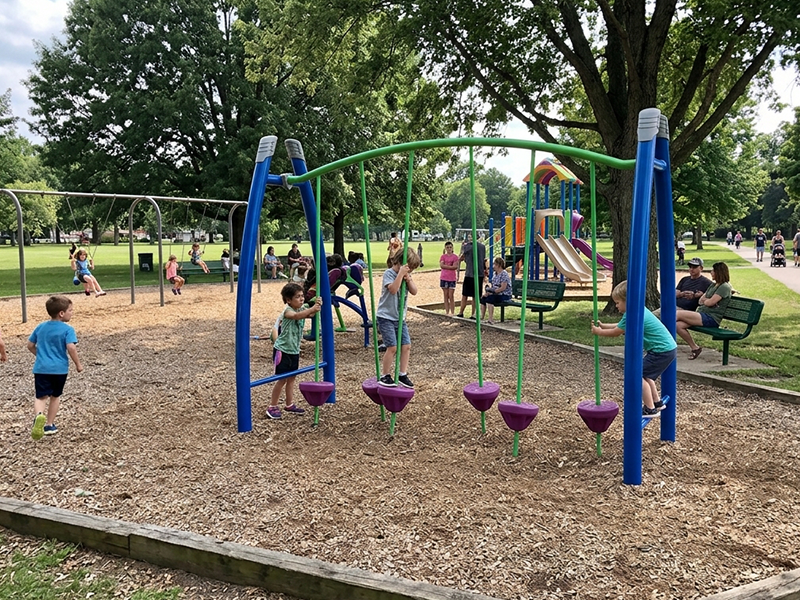
Balance Equipment
Balance beams, stepping features, and activity circuits encourage coordination and body awareness.
Best for: School playgrounds, parks, and outdoor learning spaces.
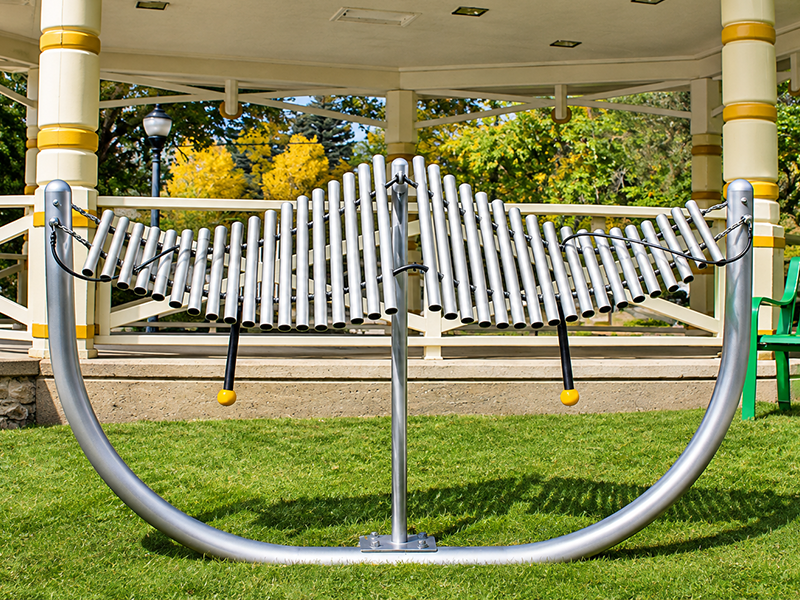
Musical & Activity Panels
Interactive games, musical instruments, and sensory panels support creativity, exploration, and social engagement.
Best for: Early childhood and inclusive playgrounds.
Tunnels & Playhouses
Crawl-through elements and playhouses encourage exploration and imaginative play, particularly in early childhood settings.
Planning focus: Visibility, access, and supervision.
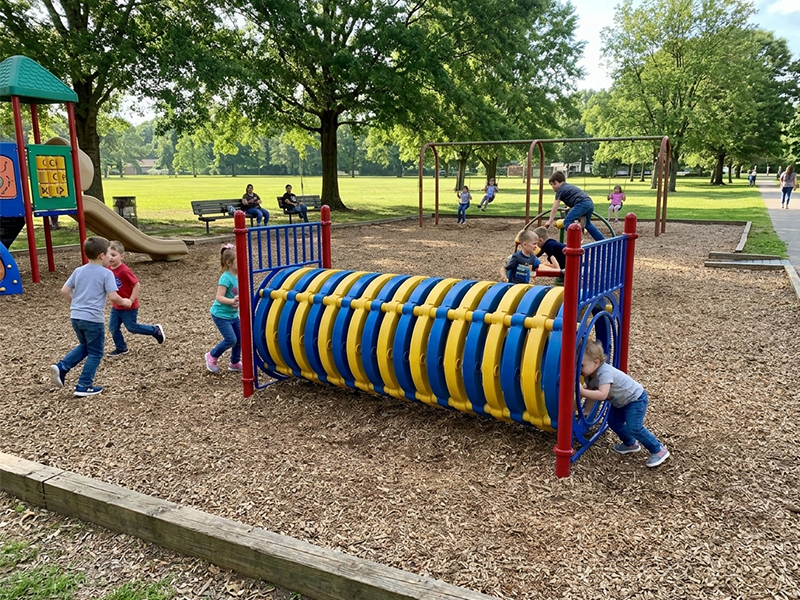
Browse Commercial Playground Equipment to compare available structures and individual play activities.
Choosing Playground Equipment by Age Group
Children develop balance, strength, judgment, and coordination at different stages. The CPSC uses developmental age groupings to help guide public playground planning.
| Age Group | Equipment to Consider | Primary Planning Focus |
|---|---|---|
| 6–23 Months | Toddler-rated structures, sensory panels, low-level activities | Caregiver access, visibility, supported exploration |
| 2–5 Years | Preschool playsets, smaller slides, spring riders, playhouses | Manageable challenges, supervision, activity variety |
| 5–12 Years | School-age structures, climbers, overhead activities, balance equipment | Physical challenges, circulation, activity separation |
| Mixed Ages | Separate age-rated structures with complementary activities | Age-group separation and clear boundaries |
Commercial Playground Equipment Materials Explained
Commercial playground structures often combine powder-coated steel, galvanized steel, high-density polyethylene, recycled plastic, rotationally molded plastic, and specialized rope components. Each material serves a different purpose and has its own maintenance considerations.
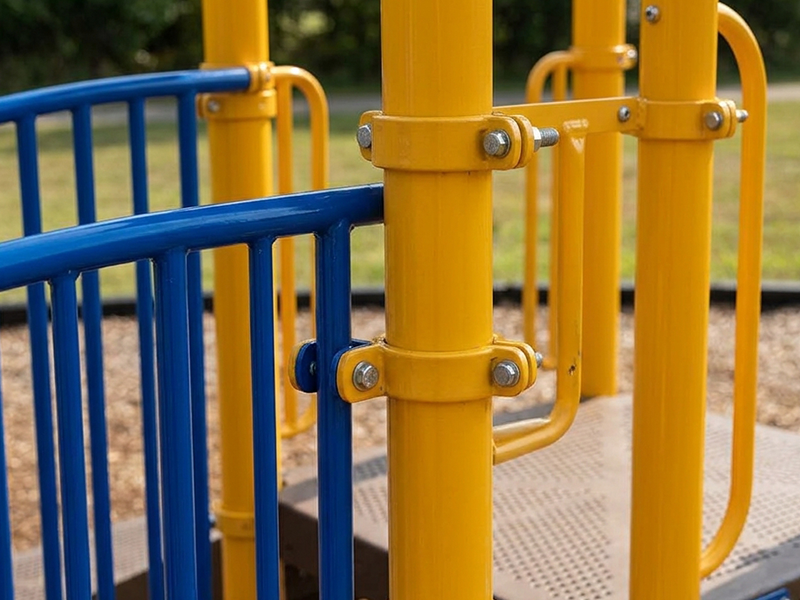
Powder-Coated Steel
Steel offers structural strength, while powder coating provides a protective finish and color options. It is commonly used for posts, frames, and climbing components.
Consider: Scratches, coating damage, corrosion exposure, and manufacturer-approved repairs.
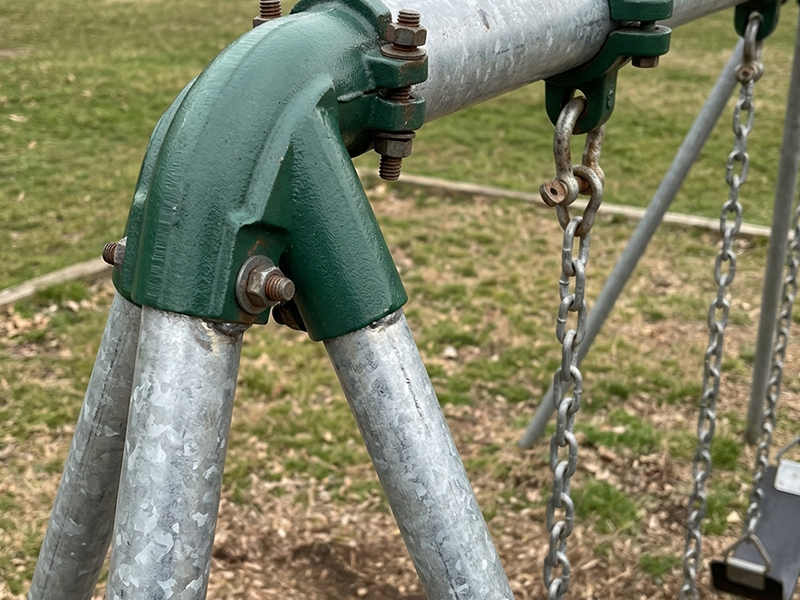
Galvanized Steel
A zinc coating helps protect the underlying steel from corrosion. Galvanized components may be used in supports, connections, and other structural applications.
Consider: Galvanizing method, coating condition, exposed edges, and environmental exposure.
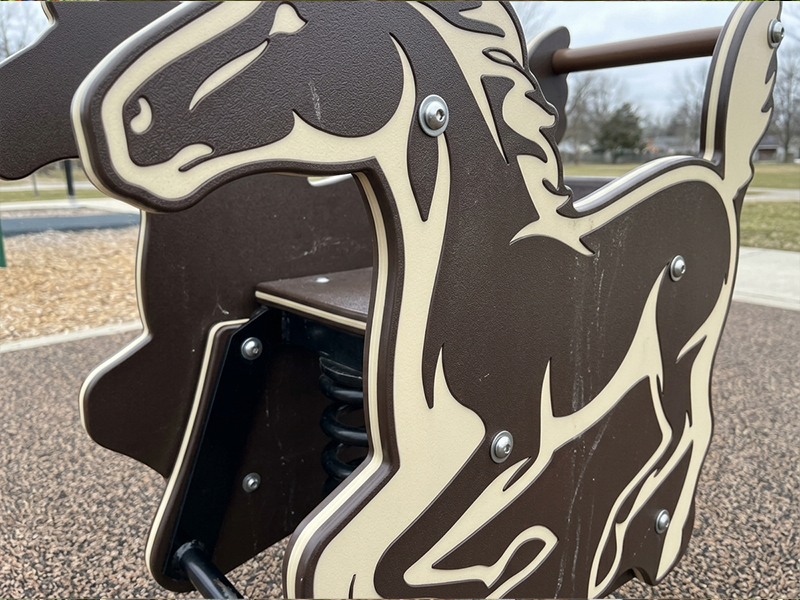
High-Density Polyethylene (HDPE)
HDPE is a durable, moisture-resistant plastic commonly used for playground panels and play components. Its smooth surfaces are easy to clean and resist rust and rot.
Consider: UV protection, color retention, temperature expansion, and structural support.
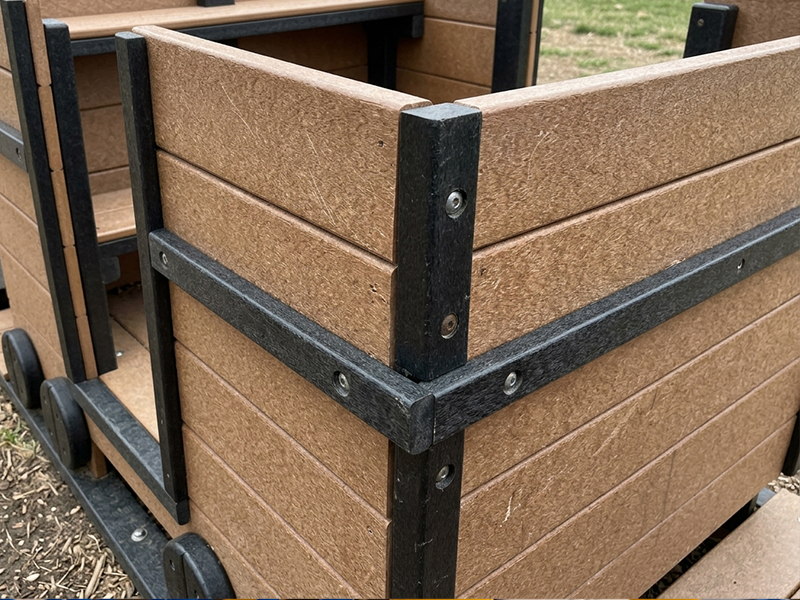
Recycled Plastic
Made using reclaimed plastic materials, recycled plastic offers a resource-conscious option for playground panels and components, with resistance to moisture, rot, and insects.
Consider: Recycled content, UV protection, structural strength, and color retention.
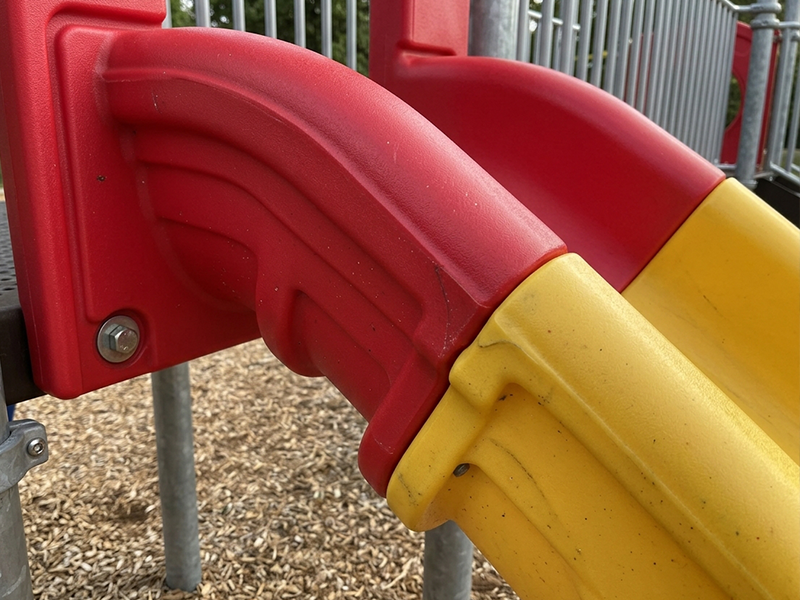
Rotationally Molded Plastic
This manufacturing process produces rounded, hollow components such as slides, tunnels, and shaped play features.
Consider: Wall thickness, cracks, fading, deformation, and attachment points.
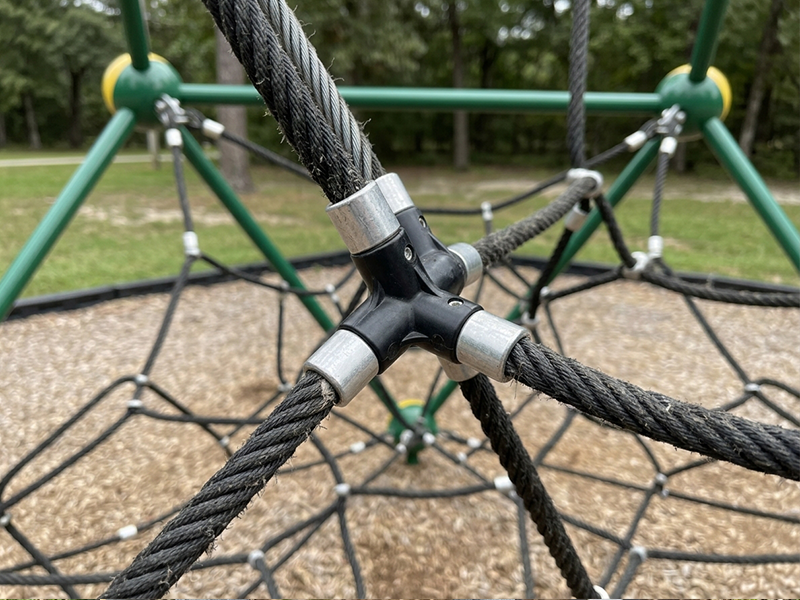
Rope & Cable Components
Flexible rope assemblies and reinforced cable systems are used in selected climbing and balancing structures.
Consider: Abrasion, tension, connection points, wear, and replacement instructions.
Playground Material Comparison
| Material | Primary Advantage | Maintenance Focus | Common Uses |
|---|---|---|---|
| Powder-Coated Steel | Structural strength and finish options | Coating damage and corrosion | Frames, posts, climbers |
| Galvanized Steel | Zinc coating helps protect against corrosion | Coating condition and connections | Supports and hardware |
| High-Density Polyethylene (HDPE) | Moisture resistance, easy cleaning, and versatile applications | UV exposure, temperature expansion, and fasteners | Activity panels and play components |
| Recycled Plastic | Use of reclaimed materials and moisture resistance | UV protection, structural condition, and color retention | Activity panels and selected play structures |
| Rotationally Molded Plastic | Rounded shapes and versatile designs | Cracks, fading, and attachment points | Slides and tunnels |
| Rope & Cable | Flexible climbing and balance activities | Abrasion, tension, and connections | Climbers and nets |
Which Playground Material Is Best?
No single material is ideal for every playground. Coastal locations may place greater emphasis on corrosion resistance, while high-use school playgrounds may prioritize structural construction, inspection accessibility, and replacement components.
The best purchasing decision considers the complete playground system, including materials, protective finishes, hardware, environmental exposure, and manufacturer documentation.
Playground Safety and Installation Considerations
Commercial playground safety depends on appropriate equipment, site design, protective surfacing, installation, and ongoing inspection. Buyers should review applicable standards and local requirements before purchasing.
Applicable Standards
ASTM F1487 addresses public-use playground equipment within its scope. ASTM F2373 addresses equipment for children 6 through 24 months. ASTM F1292 and ASTM F1951 address important surfacing performance characteristics.
Equipment Use Zones
The required use zone extends beyond the equipment footprint. Some use zones may overlap where permitted by applicable safety guidance, but required clearances must remain free of fixed structures and obstacles. Swings have additional clearance restrictions. Always verify model-specific layout drawings and installation requirements.
Protective Surfacing
Engineered wood fiber, poured-in-place rubber, rubber tiles, and other tested systems have different performance, drainage, accessibility, and maintenance requirements.
Safe Installation
Review site preparation, foundations, anchoring, underground utilities, surfacing, accessibility, permits, and manufacturer installation instructions.
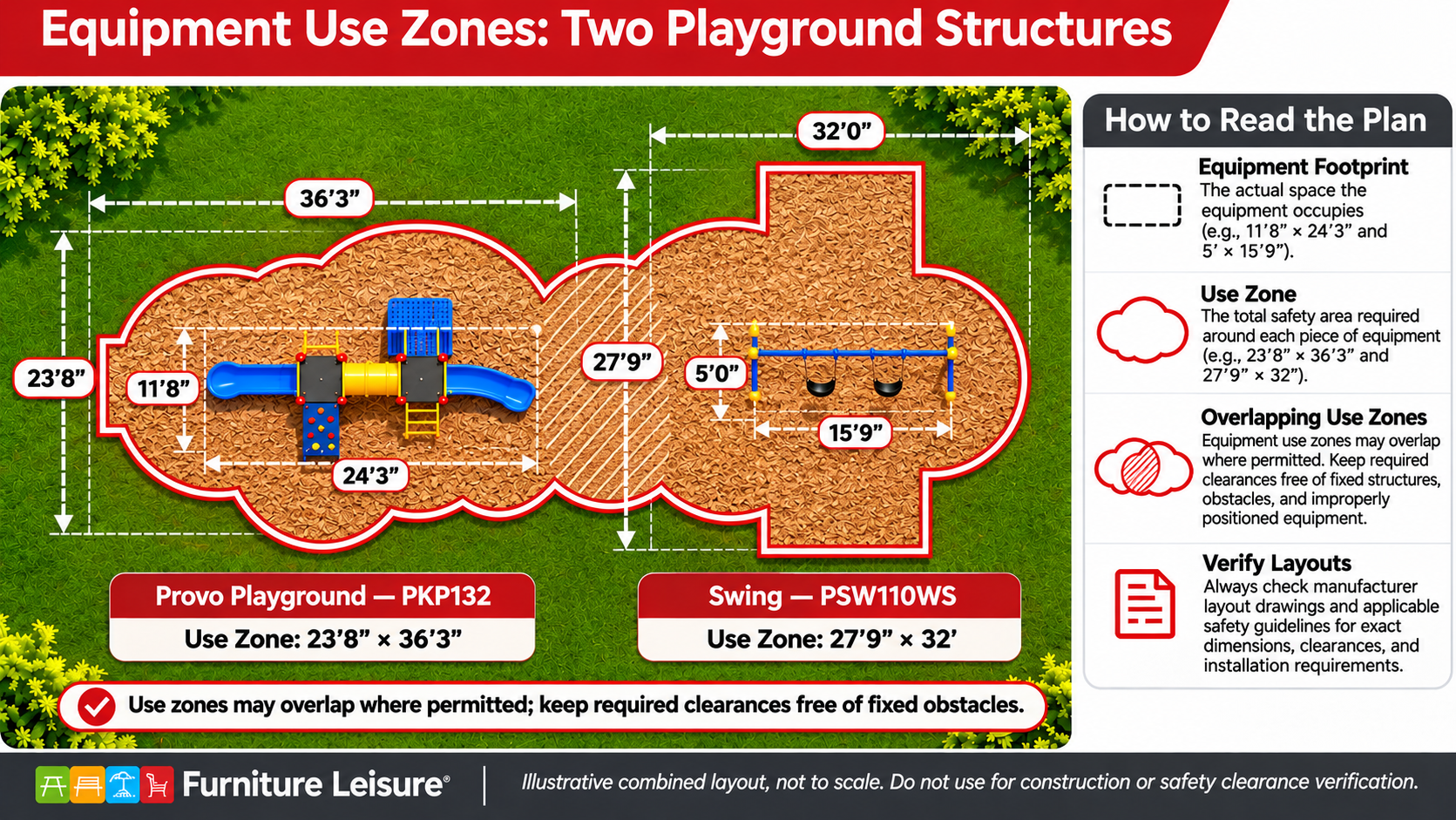
Illustrative layout only—not to scale or suitable for construction. Confirm permitted overlap, surfacing, and equipment-specific clearances using current applicable standards and manufacturer drawings.
Understanding overlapping use zones: The diagram illustrates how two equipment use zones may meet or overlap in certain circumstances. Overlap is not automatically permitted for every equipment combination, particularly swings. No fixed structures or obstacles should intrude into required clearances. Confirm exact dimensions and allowable overlap with the manufacturer's drawings and applicable playground safety standards before installation.
Inclusive and Sensory Playground Planning
Inclusive playground design provides meaningful opportunities for children with different physical, developmental, and sensory abilities to participate in play.
Accessible Routes
Connect playground entrances, accessible play components, and important gathering areas using appropriate routes and surfacing.
Sensory Activities
Musical instruments, interactive panels, textures, and games offer additional ways to explore and engage.
Shared Play
Distribute complementary activities throughout the playground so children can participate alongside one another.
Depending on the design, accessible play opportunities may include ground-level components, transfer systems, ramps, and other features. Review the U.S. Access Board's ADA Accessibility Standards when planning covered play areas.
Explore Commercial Playground Equipment for available sensory activities and inclusive play options.
Planning a Commercial Playground Layout
Equipment arrangement influences safety, supervision, accessibility, and how children move between activities. Begin with a site assessment before choosing the final playground configuration.
Measure the Available Space
Record property boundaries, slopes, drainage, utilities, walkways, landscaping, nearby buildings, and existing site furnishings.
Separate Conflicting Activities
Keep moving equipment, slide exits, gathering areas, and circulation routes appropriately separated. Consider distinct age-group zones.
Plan for Supervision
Position structures, landscaping, and seating to support visibility while keeping furniture outside required equipment use zones.
Evaluate Shade and Expansion
Consider sunlight, hot surfaces, shade placement, and potential future additions without compromising safety clearances.
Example: Small Community Playground Layout
For a neighborhood playground serving several age groups, a planner might position a preschool-rated play structure in one activity area and swings in another, with accessible routes connecting the entrance and appropriate play components. Benches can be located where caregivers have clear sightlines, outside required equipment use zones. Final equipment placement, swing clearances, surfacing, and any permitted use-zone overlap must be confirmed against the selected models' drawings and applicable requirements.
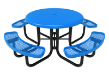
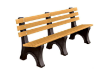
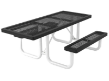
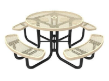
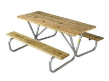
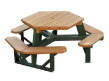
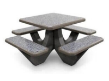
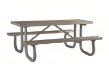
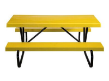
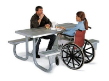
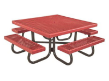
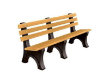
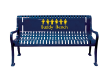
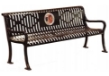
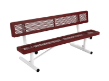
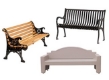
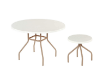
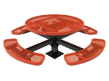
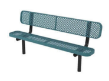
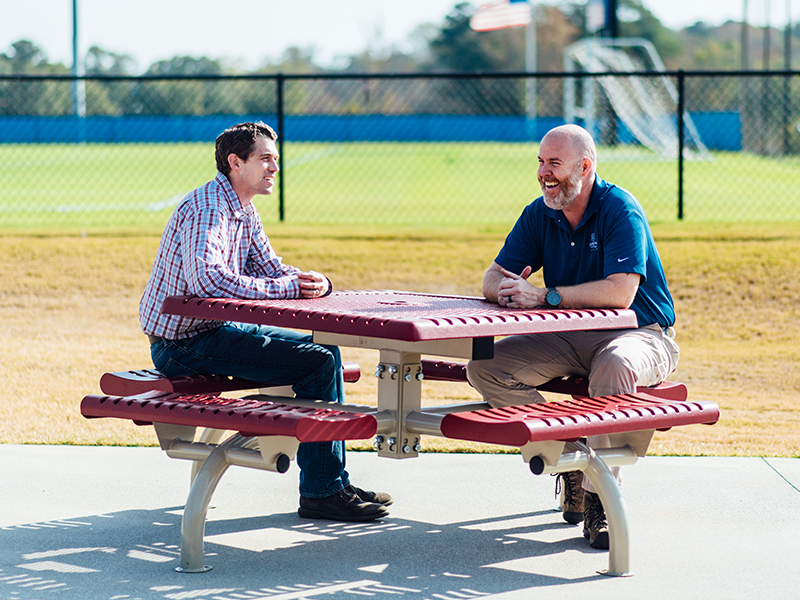
Complementary amenities such as commercial benches and picnic tables can support caregiver comfort and site functionality when positioned appropriately.
Choosing Playground Equipment for Different Facilities
Facility type, available space, and intended users influence which equipment combinations make the most sense.
| Facility | Equipment to Consider | Purchasing Priorities |
|---|---|---|
| Daycare Centers | Toddler and preschool sets, spring riders, sensory panels | Age ratings, visibility, accessible activities |
| Elementary Schools | Playground sets, climbers, slides, balance activities | Daily use, age separation, play variety |
| Public Parks | Play structures, swings, inclusive equipment, musical play | Broad user needs, accessibility, upkeep |
| HOAs & Apartments | Compact playground sets, slides, interactive panels | Available space, resident needs, maintenance |
| Campgrounds | Playground sets, swings, climbing activities | Outdoor exposure, varied users, inspection planning |
| Municipal Recreation | Multiple structures, inclusive and sensory features | Community access, maintenance, expansion |
Commercial Playground Equipment Maintenance and Longevity
Even durable playground equipment requires ongoing care. Inspection frequency should reflect manufacturer guidance, usage, environmental exposure, and applicable requirements.
Structural Components
Check posts, frames, platforms, anchoring, and fasteners for movement, damage, or deterioration.
Metal Finishes
Inspect protective coatings for scratches, wear, and corrosion. Follow approved cleaning and repair procedures.
Plastic Components
Look for cracks, deformation, damaged attachments, and other visible signs of wear.
Moving Equipment
Inspect swing connections, rotating components, and other wear points according to manufacturer instructions.
Protective Surfacing
Evaluate displacement, material condition, drainage, seams, and other system-specific maintenance needs.
Inspection Records
Document findings, completed repairs, component replacements, and recurring maintenance concerns.
Understanding Total Playground Ownership Costs
The initial equipment price is only one part of a commercial playground project. A complete budget should include site preparation, installation, surfacing, accessibility, and long-term upkeep.
| Cost Category | Items to Evaluate |
|---|---|
| Equipment | Structures, individual activities, accessories |
| Site Preparation | Grading, drainage, excavation, site adjustments |
| Installation | Labor, foundations, anchoring, assembly |
| Protective Surfacing | Materials, installation, ongoing maintenance |
| Accessibility | Routes, surfacing, accessible play components |
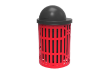
| Site Amenities | Benches, shade, fencing, trash receptacles |
| Long-Term Care | Inspections, cleaning, repairs, replacement parts |
A lower initial price does not necessarily provide the lowest ownership cost. Compare construction quality, maintenance requirements, replacement-part availability, and installation expenses alongside the purchase price.
Commercial Playground Equipment Buying Checklist
Use this checklist to organize project requirements and compare playground equipment before requesting a quote.
Facility & Users
Equipment Selection
Site Planning
Purchasing & Installation
Frequently Asked Questions
What is the difference between commercial and residential playground equipment?
Commercial equipment is intended for shared-use settings such as schools, parks, and daycare centers. It is designed and evaluated for different usage conditions and applicable requirements than equipment intended for private residential backyards.
What is the best material for commercial playground equipment?
The best choice depends on the component, construction quality, installation environment, and maintenance requirements. Powder-coated steel, galvanized steel, HDPE, recycled plastic, and molded plastics offer different advantages. Many commercial playground structures combine several materials to achieve the intended design and functionality.
What age groups should playground equipment accommodate?
The CPSC identifies developmental groups of 6–23 months, 2–5 years, and 5–12 years for public playground planning. Always verify the manufacturer's age rating for each specific product.
How much space is needed for commercial playground equipment?
Space requirements depend on equipment dimensions, configuration, use zones, and applicable standards. The required installation area generally extends beyond the structure's physical footprint.
Does commercial playground equipment require protective surfacing?
Appropriate protective surfacing is generally required beneath and around public playground equipment where falls may occur. Evaluate surfacing for fall height, impact performance, accessibility, and applicable requirements.
What should buyers consider for coastal playground installations?
Review corrosion-resistant materials, protective coatings, hardware specifications, salt exposure, and maintenance recommendations. Confirm that selected products are suitable for the intended environment.
How can a commercial playground be more inclusive?
Provide appropriate accessible routes, surfacing, and meaningful play opportunities. Ground-level activities, sensory elements, and accessible play components can contribute to a coordinated inclusive design.
How often should commercial playground equipment be inspected?
Inspection frequency depends on the equipment, manufacturer guidance, site usage, environmental conditions, and local requirements. Facilities should maintain a documented inspection and maintenance program.
Related Playground Planning Resources
Explore these resources when comparing equipment, evaluating accessibility, and planning the surrounding outdoor space.
Find the Right Commercial Playground Equipment
Whether you're planning a school playground, upgrading a community park, or adding recreation amenities to a residential property, choosing the right equipment starts with understanding your users, site conditions, and long-term needs.
Explore Furniture Leisure's selection of commercial playground structures and individual play activities for shared-use outdoor environments.
Shop Commercial Playground Equipment


Leave your comment